
The Entrepreneur's Guide to Efficiently Generating Warm Leads
The Entrepreneur's Guide to Efficiently Generating Warm Leads: Mastering Tools and Strategies for Lasting Success

In the fast-paced world of business, where competition is fierce and time is of the essence, mastering the art of lead generation is crucial for sustained growth and success. For CEOs, entrepreneurs, and sales professionals, the challenge lies in efficiently converting cold contacts into warm leads that are more likely to result in sales. As we navigate the intricacies of lead generation strategies, it becomes evident that understanding the nuances of your target audience can significantly enhance your ability to cultivate meaningful relationships. This guide will delve into proven tactics for generating warm leads, offering insights into how you can fine-tune your approach to attract and engage potential business leads effectively. Join us as we unlock the secrets to optimizing your sales pipeline and driving your business forward with confidence.
Understanding Warm Leads
Grasping the concept of warm leads is essential for any business looking to effectively convert interest into sales. Warm leads are potential customers who have shown some level of interest or engagement with your company. Understanding their characteristics and how they differ from cold leads can greatly influence your sales tactics.
Defining Warm Leads
Warm leads are individuals or businesses that have interacted with your brand in some meaningful way. They might have signed up for a newsletter, downloaded a resource, or engaged with your social media posts. These leads are considered "warm" because they have demonstrated an interest in what you offer.
Unlike cold leads, warm leads have already crossed the threshold of awareness. This means they are more likely to convert into paying customers compared to those who are not yet familiar with your brand. By identifying and nurturing these leads, businesses can streamline their sales process and improve conversion rates.
In essence, warm leads represent the middle ground in the sales funnel. They have moved past the initial stage of awareness and are open to further engagement. This makes them prime candidates for personalized marketing strategies and targeted communication efforts.
The Importance of Warm Leads
The importance of warm leads cannot be overstated. Warm leads provide a higher likelihood of conversion due to their prior engagement with your business. This engagement indicates a genuine interest, which can be cultivated into a purchase decision with the right strategy.
Nurturing warm leads also provides a more efficient use of marketing resources. By focusing efforts on those already interested, businesses can achieve better results with less expenditure. Warm leads are more likely to respond positively to personalized communication, enhancing the effectiveness of targeted campaigns.
Moreover, warm leads can act as a bridge to further opportunities. They might refer others to your business or become repeat customers, thereby increasing your customer base. This ripple effect underscores the value of investing in strategies that prioritize warm leads.
Differentiating Cold and Warm Leads
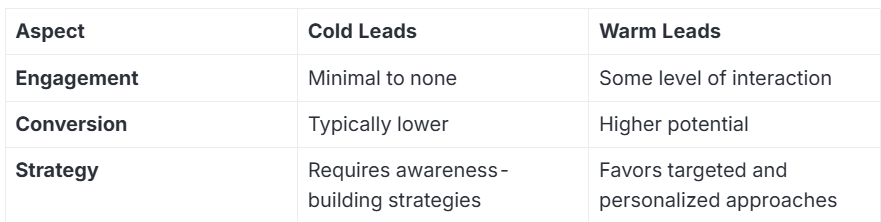
Understanding the difference between cold and warm leads is crucial for developing effective sales strategies. Cold leads are potential customers who have not yet interacted with your brand. They require more effort to convert as they lack prior engagement or interest.
Warm leads, on the other hand, have shown an interest in your offerings. They are more receptive to your communications and are therefore easier to convert. By recognizing these differences, businesses can tailor their approaches to maximize efficiency and effectiveness.
Proven Lead Generation Strategies
Generating warm leads involves employing strategies that capture interest and encourage engagement. By leveraging content marketing, social media, and strategic partnerships, businesses can effectively cultivate warm leads.
Leveraging Content Marketing
Content marketing is a powerful tool for generating warm leads. By creating valuable and relevant content, businesses can attract and engage potential leads. This content can take various forms, including blog posts, infographics, videos, and eBooks.
Identify your target audience's interests and pain points.
Create content that addresses these areas, offering solutions and insights.
Distribute content through channels where your audience is active.
By consistently providing quality content, businesses can position themselves as industry thought leaders. This builds trust and encourages potential leads to engage further with your brand, ultimately warming them up for conversion.
Utilizing Social Media Platforms
Social media platforms are invaluable for generating warm leads. They provide an avenue for businesses to connect directly with their audience, fostering engagement and interaction. Platforms like LinkedIn, Alignable, Facebook, and Instagram offer unique opportunities for lead generation.
Regularly post engaging content that resonates with your audience.
Use social media ads to target specific demographics and interests.
Engage with your audience through comments, messages, and social listening.
According to LinkedIn, leveraging these platforms allows businesses to maintain a consistent presence, keeping potential leads engaged and interested in their offerings.
Networking and Partnerships
Networking and strategic partnerships can significantly boost your lead generation efforts. By collaborating with other businesses or influencers, you can tap into new audiences and expand your reach.
Attend industry events and conferences to connect with potential partners.
Establish mutually beneficial relationships with complementary businesses.
Collaborate on joint ventures, webinars, or co-marketing efforts.
These partnerships can introduce your brand to new potential leads who are already interested in related products or services, thereby warming them up to your offerings.

Tools and Techniques for Efficient Lead Generation
Employing the right tools and techniques can streamline lead generation efforts, turning cold leads into warm prospects more efficiently. CRM systems, automation tools, and data analytics are pivotal in optimizing these processes.
CRM Systems for Lead Management
Customer Relationship Management (CRM) systems are essential for managing and tracking interactions with potential leads. These systems provide a centralized platform for storing and analyzing lead data, facilitating more personalized and efficient communication.
Organize and categorize leads based on their engagement level.
Track interactions and follow-up activities to ensure timely communication.
Use insights from CRM analytics to refine lead-nurturing strategies.
By leveraging CRM systems, businesses can ensure that no lead falls through the cracks, maximizing their chances of conversion.
Automation Tools for Streamlining Processes
Automation tools can significantly enhance lead generation efforts by streamlining repetitive tasks. These tools allow businesses to automate email marketing, social media posting, and lead scoring, ensuring that potential leads are consistently engaged.
Set up automated email campaigns to nurture leads over time.
Use social media management tools to schedule and publish posts.
Implement lead scoring systems to prioritize follow-up efforts.
By automating these processes, businesses can focus more on strategy and less on execution, leading to more efficient and effective lead generation.
Data Analytics for Targeting Leads
Data analytics plays a crucial role in targeting leads more effectively. Businesses can identify patterns and trends that inform their lead generation strategies by analyzing customer data.
Analyze website traffic to understand user behavior and preferences.
Use data insights to tailor marketing messages to specific segments.
Continuously monitor and refine strategies based on data-driven results.
According to Growleady, leveraging data analytics enables businesses to make informed decisions, enhancing their ability to attract and convert warm leads.
Nurturing and Converting Warm Leads
Once leads are warmed up, the focus shifts to nurturing them through personalized communication and building trust. Effective follow-up strategies and credibility-building techniques are key to converting these leads into loyal customers.
Effective Follow-up Strategies
Follow-up strategies are critical for keeping warm leads engaged. Timely and relevant follow-ups demonstrate your commitment to meeting their needs and can significantly impact conversion rates.
Schedule regular follow-ups based on lead interactions and preferences.
Personalize follow-up messages to address specific interests or concerns.
Use a mix of communication channels, such as email, phone calls, and social media.
By applying these strategies, businesses can maintain momentum and move leads closer to making a purchase decision.
Personalization in Lead Communication
Personalization in communication is essential for nurturing warm leads. Tailoring messages to address individual preferences and needs enhances engagement and builds rapport.
Use lead data to customize email content and offers.
Address leads by name and acknowledge their previous interactions.
Provide solutions that are specifically relevant to their situation.
By personalizing communication, businesses can create a more meaningful connection with leads, increasing the likelihood of conversion.
Building Trust and Credibility
Building trust is fundamental in converting warm leads. Trust can be established through consistent communication, delivering on promises, and showcasing customer testimonials or case studies.
Share customer success stories and reviews to build credibility.
Ensure that all communications are transparent and honest.
Provide consistent value through content and interactions.
By fostering trust, businesses can create a strong foundation for long-term relationships with their leads.
Measuring Success in Lead Generation
To ensure continuous improvement in lead generation efforts, it's essential to measure success through key metrics. By analyzing performance indicators and adjusting strategies accordingly, businesses can enhance their lead generation outcomes.
Key Performance Indicators (KPIs)
Key Performance Indicators (KPIs) provide valuable insights into the effectiveness of lead generation strategies. By tracking these metrics, businesses can assess their performance and identify areas for improvement.
Monitor conversion rates to evaluate the success of lead-nurturing efforts.
Track engagement metrics, such as email open rates and click-through rates.
Analyze the cost per lead to determine the efficiency of marketing spend.
Regularly reviewing KPIs allows businesses to make data-driven decisions that optimize lead generation strategies.
Adjusting Strategies Based on Results
Adjusting strategies based on results is crucial for staying competitive in lead generation. By analyzing outcomes, businesses can refine their approaches to better meet the needs of their target audience.
Identify which strategies are yielding the best results and scale them.
Determine underperforming tactics and consider alternative approaches.
Continuously experiment with new tactics to stay ahead of market trends.
According to Business.com, a systematic approach to strategy adjustment can significantly enhance lead generation success.
Long-Term Relationship Building
Long-term relationship building is the ultimate goal of lead generation. By fostering lasting connections with leads, businesses can ensure sustained growth and customer loyalty.
Focus on providing ongoing value to leads even after conversion.
Engage with customers regularly to maintain relationships and encourage repeat business.
Encourage feedback and use it to improve products and services.
By investing in relationship building, businesses can create a loyal customer base that supports long-term success.